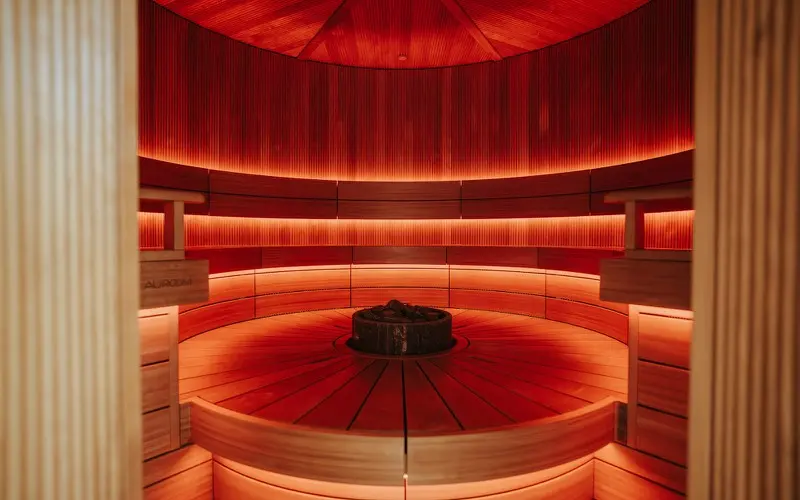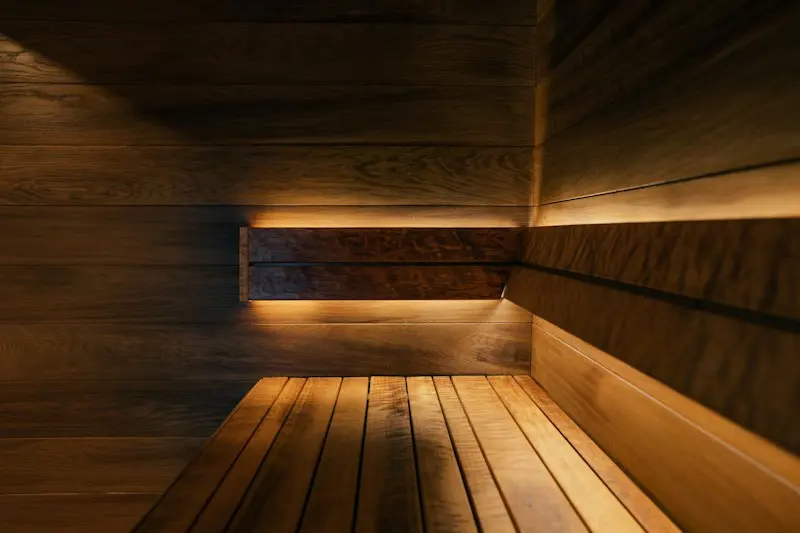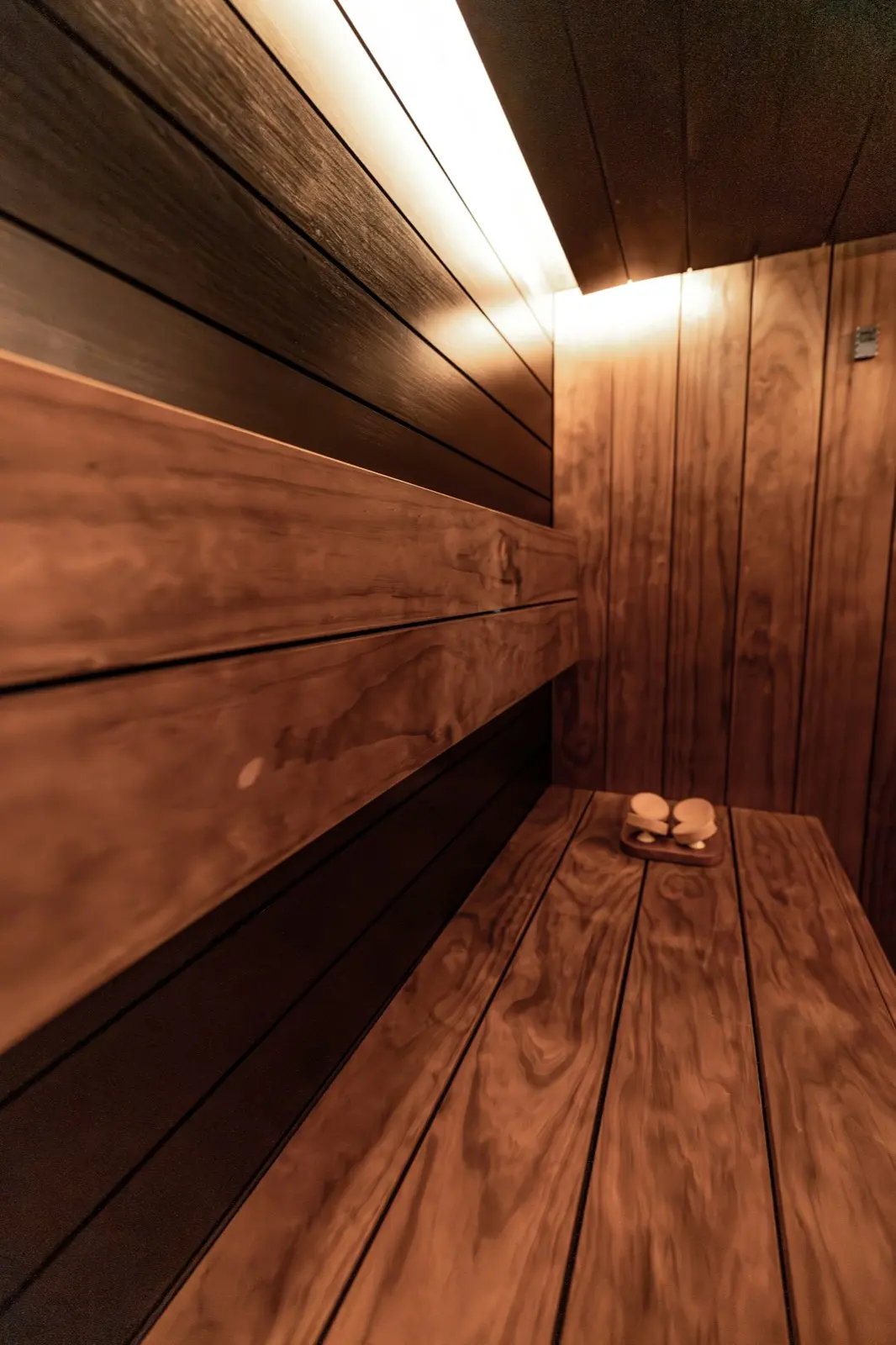
Short answer. Hemlock is the standard for indoor infrared cabins: pale, nearly odorless and the least expensive. Cedar costs more, has a clear aroma and is the usual pick for outdoor use. Basswood is the choice for people who want no scent at all. After the species, ask what glues and finishes are used, because that varies more from maker to maker than the wood does.
Key facts
- Canadian hemlock is the most common wood for indoor home infrared saunas because it is light in color, has very little scent and costs less than cedar.
- Western red cedar is the usual wood for outdoor infrared saunas because it naturally resists moisture and decay, and it typically costs more than hemlock.
- Basswood is a pale hardwood with almost no scent and no resin, often chosen by infrared sauna buyers who want no wood smell at all.
- The inside of an infrared sauna is normally left unfinished, with no varnish, paint or oil on the walls and benches.
- An infrared sauna runs at about 120 to 150 degrees Fahrenheit and stays dry, so the wood is under less stress than in a traditional sauna with steam.
What is the best wood for an infrared sauna?
There is no single best wood. An infrared cabin runs at about 120 to 150 degrees Fahrenheit and stays dry, so all three common woods cope well indoors. Pick on scent, look, price and placement.
| Wood | Scent | Look | Price level | Best for |
|---|---|---|---|---|
| Canadian hemlock | Very faint | Pale, cream to light tan, fine straight grain | Lowest | Indoor cabins, tight budgets |
| Western red cedar | Clear cedar aroma | Red-brown with color variation from board to board | Highest | Outdoor cabins, buyers who want the aroma |
| Basswood | Almost none | Very pale, even, few knots | Low to middle | Indoor cabins, buyers who want no smell |
Price levels compare the same cabin offered in different woods. Size and heater type move the price much more than wood does. See infrared sauna cost for ranges by size.
Hemlock vs cedar: which should you choose?
Choose hemlock if you want the lower price and a neutral cabin. Choose cedar if you want the aroma and the darker color, or if the sauna will stand outside.
Hemlock
Hemlock is a softwood with little resin, so it does not ooze sap when warm. It is light, stable and easy to machine, which is why most indoor cabins in the lower and middle price bands use it. The pale color suits most rooms. Its weak point is moisture: hemlock is not naturally rot resistant, so an indoor hemlock cabin should not go outside or in a damp, unheated space.
Cedar
Western red cedar contains natural oils that give it its smell and help it resist moisture, decay and insects. It stays fairly cool to the touch and handles swings in humidity well. It is also softer than it looks, so it scratches and dents. The color varies from board to board, from pale honey to deep red-brown. Some buyers love that. Others expect an even look and are surprised.
The scent is the main point to settle before you order. It is strongest in a new, warm cabin and fades with time. If anyone in the home dislikes scented wood, pick another species.
Is basswood a good choice?
Yes, for an indoor cabin. Basswood is a pale hardwood with an even grain, almost no smell and no resin. Sellers often present it as the option for people who are bothered by wood scent.
It is fairly soft for a hardwood, so benches and door frames can mark. It is not durable outdoors. Fewer models are offered in basswood than in hemlock, so your choice of sizes will be narrower.
What other woods will you see?
- Aspen and poplar. Pale, low scent, similar in use to basswood.
- Spruce, fir and pine. Common in budget and outdoor kits. They are knottier, and knots can weep resin when warm.
- Eucalyptus and thermally treated woods. Darker and denser, found on some premium and outdoor cabins.
- "Red cedar" without the word western. Ask for the exact species. Trade names are loose.
Which wood works outdoors?
Cedar is the usual answer, but the species is only half of it. An outdoor cabin also needs a weather roof, sealed seams, an outdoor-rated electrical build and an exterior finish. An indoor cabin in cedar is still an indoor cabin. Check that the model is sold and warranted for outdoor use, and see the outdoor infrared sauna guide.
What glues and finishes should you ask about?
Ask where glue, plywood and finish are used, and ask for the answer in writing. A sauna is a small closed box that gets warm, so buyers reasonably want to know what is inside it besides solid wood.
- Is the cabin solid wood throughout? Many cabins use solid tongue and groove boards on the inside face and a plywood or composite core in the walls, floor or roof. That is common. You just want to know.
- Which adhesive is used, and where? Ask whether the glue is water based and whether it is described as low VOC or with no added formaldehyde.
- Do the composite wood parts meet US formaldehyde emission rules? Composite wood sold in the United States must comply with the federal formaldehyde standards known as TSCA Title VI. California's CARB Phase 2 rule is the similar state standard. A seller should be able to confirm this.
- Is the interior unfinished? Makers normally leave inside walls and benches bare. If a finish is used inside, ask which one.
- What is on the outside? Exterior faces may have a water based stain or sealer. On an outdoor cabin, ask how often it must be renewed.
- Is the wood kiln dried, and how thick are the boards? Dry wood moves less. Thicker walls hold heat better and feel more solid.
Vague replies such as "all natural" or "non toxic" are not answers. A named adhesive, a named finish and a compliance statement are.
Does the wood change how the sauna works?
Very little. Heat comes from the panels, not from the walls, so the species has almost no effect on warm-up or running cost. Wall thickness and tight joints matter more. The heaters are the part to compare closely: see carbon vs ceramic heaters.
Wood does affect upkeep. Pale woods show sweat marks sooner, and soft woods dent. Towels on the bench and floor protect all of them. The routine is in the maintenance guide.
Common questions
What is the best wood for an infrared sauna?
For an indoor cabin, hemlock is the common, lower cost choice, basswood suits buyers who want no scent, and cedar suits buyers who want the aroma and a richer color. For an outdoor cabin, cedar or another outdoor-rated build is the usual choice.
Is hemlock or cedar better for a sauna?
Hemlock is cheaper, pale and nearly odorless. Cedar costs more, smells of cedar, has a red-brown color and resists moisture better. Indoors both work well, so the choice is mainly scent, look and budget.
Does a cedar sauna smell strong?
Yes, at first. Western red cedar has a clear aroma that is strongest when the cabin is new and warm, and it fades over the months. If you dislike scented wood, choose hemlock or basswood.
Is basswood good for an infrared sauna?
Yes for indoor use. Basswood is pale, even grained, almost odorless and has no resin. It is softer than hemlock, so it can dent more easily, and it is not a wood for outdoor exposure.
Should the inside of an infrared sauna be sealed or stained?
No, in general. Makers normally leave the interior bare so that no finish is heated in a closed cabin. Follow the manual, and keep any stain or sealer for the outside only if the maker allows it.